
End-of-Summer Offers · Save up to 20% on Ultra Heat systems
Indirect gas pool heating that separates the boiler circuit from swimming-pool water through a heat exchanger.

Gas Heater with Heat Exchanger (Italian Type)

Indirect gas pool heating uses a separate boiler circuit and heat exchanger to transfer heat to pool water while keeping the two water circuits isolated.
01
Separated water circuits
The boiler water and pool water remain in independent circuits and exchange heat through the heat exchanger.
02
Flexible equipment layout
The boiler and heat exchanger can be arranged to suit plant-room space, service access and hydraulic requirements.
03
Calculated heat transfer
Heat-exchanger duty is selected from the pool heating load, water flows and design temperature difference.
04
Centralized controls
Pumps, valves and temperature controls can coordinate the primary heating circuit with the pool circulation side.
About this service

How Indirect Gas Pool Heating Works

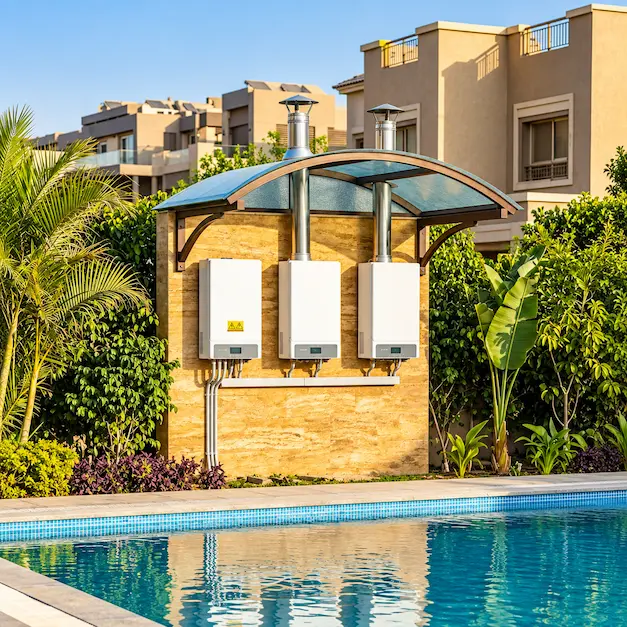
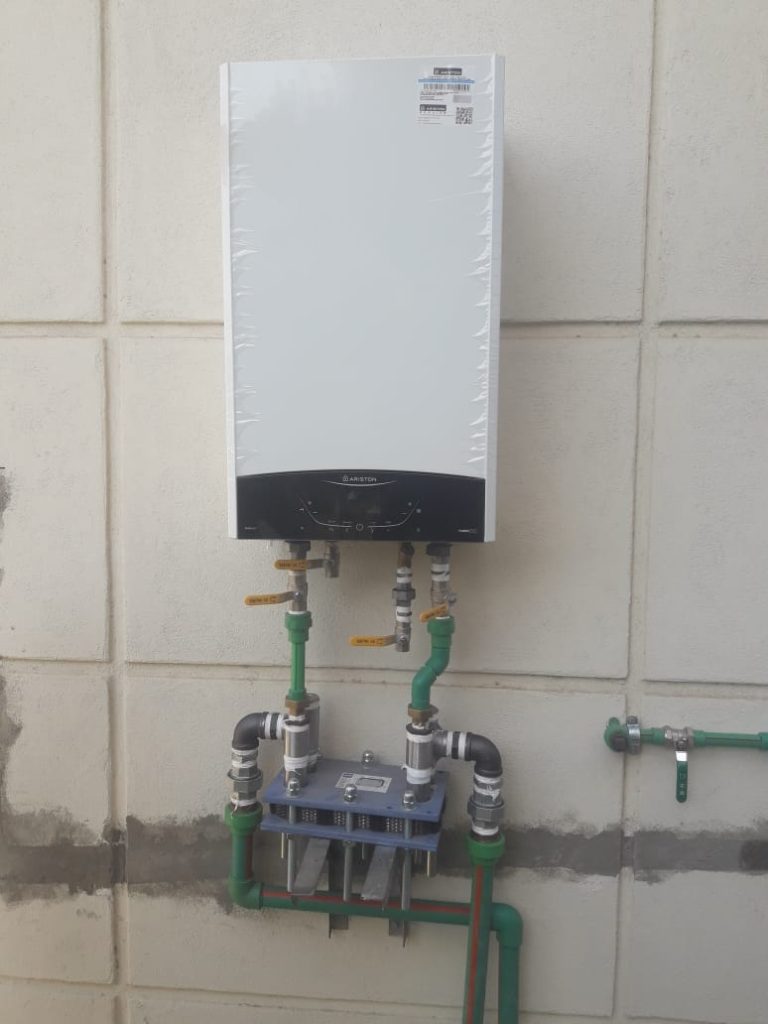
In the Italian-type arrangement, a gas-fired boiler heats a closed primary water circuit. That hot water passes through a separate heat exchanger, where thermal energy is transferred to the swimming-pool water without mixing the two circuits.

The design separates the boiler side from pool-water chemistry and gives the system engineer more flexibility in equipment selection and hydraulic layout. Boiler output, heat-exchanger duty, primary flow, pool flow, temperature difference and control strategy should all be calculated together.

Ultra Heat can integrate the boiler, circulation pumps, heat exchanger, valves and controls with the existing pool filtration circuit. Correct commissioning verifies flow on both sides and confirms that controls respond to the required pool-water temperature.

Key Highlights
✓

A gas boiler heats water in a closed primary circuit.

✓

The primary water passes through a heat exchanger rather than entering the swimming-pool circuit.

✓

Pool water flows through the secondary side of the heat exchanger and receives heat from the primary circuit.

✓

Controls operate pumps and the heat source according to the required pool-water temperature.
i

Size the boiler and heat exchanger together

A large boiler with an undersized heat exchanger, or the reverse, will not produce the intended system performance. Both sides should be selected from the same calculated pool-heating duty.

Get Your Free Quote

Tell us how we can help. Our team will review your request and contact you as soon as possible.

No obligation. Your information is used only to contact you about your request.

Key Features

Key benefits of an indirect gas pool-heating arrangement.

01

Isolation from pool water

The boiler circuit is protected from direct contact with chemically treated swimming-pool water.
02

Flexible plant-room design

Separate components allow the hydraulic layout to be adapted to available space and maintenance access.
03

Serviceable components

Boiler, pumps, valves and heat exchanger can be inspected and serviced as distinct parts of the plant.
04

Controlled heat transfer

The heat exchanger and flow rates can be selected to match the calculated pool load and operating temperatures.
05

Suitable for integrated systems

The arrangement can be coordinated with a broader hydronic plant when the project has compatible heating requirements.
Related Solutions

Related Swimming Pool Heating Solutions

Compare the indirect boiler-and-heat-exchanger arrangement with the other swimming-pool heating solutions offered by Ultra Heat.
Frequently Asked Questions

Key Questions Before Starting the Project

Common questions about gas pool heating with a separate heat exchanger.

Why use a separate heat exchanger?

It transfers heat between the boiler circuit and the pool circuit while keeping the two water systems physically separated.

How is the heat exchanger sized?

Its duty is selected from the calculated pool heating load, primary and secondary flow rates, and the design temperature difference.

Does the boiler water mix with pool water?

No. In this arrangement the fluids circulate on separate sides of the heat exchanger and do not mix during normal operation.

What controls are typically required?

The design can include pool temperature control, pumps, valves and interlocks so the heat source runs when the pool circuit can accept heat.

What maintenance should be planned?

Routine checks should include the boiler, pumps, valves, heat-exchanger condition, water flows and control operation on both circuits.

Need Help Choosing the Right System?

Ready to Choose the Right System for Your Property?

Send us your project details, and our team will review your requirements.

Ultra Heat
The company history market with continued technological research by an aim to furnish with warmth , create innovative solution that respond to requirements for best performance and appearance at the time.

Services

Follow us