
End-of-Summer Offers · Save up to 20% on Ultra Heat systems
POOL HEATING FOR HOMES, CLUBS & HOSPITALITY

Swimming Pool Heating Systems

Pool-heating systems for homes, clubs and hospitality projects, with gas-heater and heat-exchanger options sized around pool volume and operating conditions.
01
Extend the Swimming Season
Maintain a more usable pool temperature beyond the warmest months of the year.
02
Fast Heating Options
Gas-fired pool heaters can provide high output where rapid temperature recovery is important.
03
Heat-Exchanger Integration
A heat exchanger can connect the pool circuit to a boiler or another compatible heat source.
04
Sized for Pool & Site Conditions
Selection considers water volume, target temperature, weather, exposure and operating pattern.
About this service

A Pool-Heating System Designed Around Water Volume and Operating Conditions

A swimming-pool heating system helps maintain a more usable water temperature when ambient conditions are below the comfort level required by the project. The correct solution depends on more than pool size alone: water volume, target temperature, starting temperature, wind exposure, operating hours and whether the pool is covered all influence the heating load.

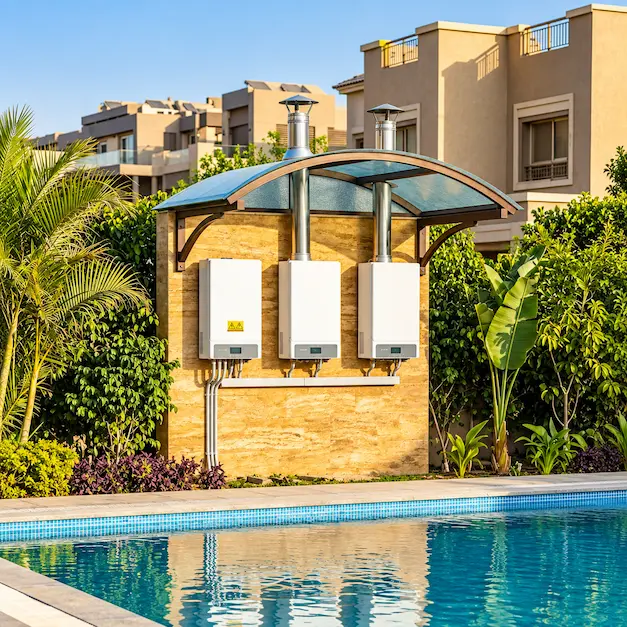
Ultra Heat can provide direct gas pool-heating solutions where fast temperature recovery and high heating output are priorities. For projects that already have a central boiler or another compatible heat source, a heat exchanger can transfer energy to the pool circuit while keeping the pool water hydraulically separated from the primary heating loop.

The heating equipment must work correctly with the filtration and circulation system. Flow rate, pipe sizing, bypass arrangement, water treatment and equipment location all need to be considered so the heater or heat exchanger operates within its intended conditions.

For both new pools and existing installations, Ultra Heat reviews the available utilities and operating requirements before selecting equipment. Using a suitable pool cover can also reduce heat loss significantly and lower the amount of energy needed to maintain the target temperature.

Key Highlights
✓

Direct gas heaters and heat-exchanger solutions are available

✓

Heating capacity is calculated from pool volume and heat loss

✓

A suitable pool cover can reduce heat loss and operating demand

✓

Heater flow and piping must integrate correctly with the filtration circuit

i

Pool-heating capacity is not based on water volume alone

Target temperature, ambient conditions, wind exposure, operating hours and whether the pool is covered all affect the required heating capacity.

Get Your Free Quote

Tell us how we can help. Our team will review your request and contact you as soon as possible.

No obligation. Your information is used only to contact you about your request.

Key Features

What a correctly selected pool-heating system can add to the project

01

Longer usable season

Maintain comfortable pool conditions during cooler periods instead of limiting use to the hottest months.
02

Faster temperature recovery

High-output heating options can raise water temperature more quickly when the pool needs to recover after cooling.
03

More stable water comfort

A properly controlled system can help maintain the selected temperature rather than relying only on weather conditions.
04

Flexible heat-source options

Choose a direct gas heater or integrate the pool through a heat exchanger with a compatible central heat source.
05

Engineered hydraulic integration

Flow, bypass, piping and equipment location are coordinated with the pool circulation and filtration system.
Related Solutions

Choose the right way to heat your pool

Compare direct gas pool heaters with heat-exchanger solutions connected to a central heat source.
Frequently Asked Questions

Key Questions Before Starting the Project

Practical questions to review before selecting pool-heating equipment.

How long does it take to heat a swimming pool?

Heating time depends on pool volume, the required temperature rise, heater output, ambient conditions, wind exposure and whether the pool is covered. It should be estimated from the actual project conditions.

What is the difference between a gas pool heater and a heat exchanger?

A gas pool heater produces heat directly for the pool circuit. A heat exchanger transfers heat from another source, such as a central boiler, to the pool water through a separate circuit.

Does a pool cover reduce heating demand?

Yes. A suitable cover can reduce evaporation and surface heat loss, which can lower the energy needed to maintain the target water temperature.

Can a heating system be added to an existing pool?

Often yes, but the existing filtration layout, available pipework, plant-room space, utilities and flow rates should be reviewed before selecting the equipment.

What determines the cost of a pool-heating system?

Cost depends on pool volume, required heating capacity, selected technology, hydraulic modifications, utilities, controls and installation conditions.

Need Help Choosing the Right System?

Ready to Choose the Right System for Your Property?

Send us your project details, and our team will review your requirements.

Ultra Heat
The company history market with continued technological research by an aim to furnish with warmth , create innovative solution that respond to requirements for best performance and appearance at the time.

Services

Follow us